Alex Hormozi's Skool Games Review: Free Books, a $99 Platform, and a Very Clever Funnel
Posted on by Liza Kemmel · 10 min read
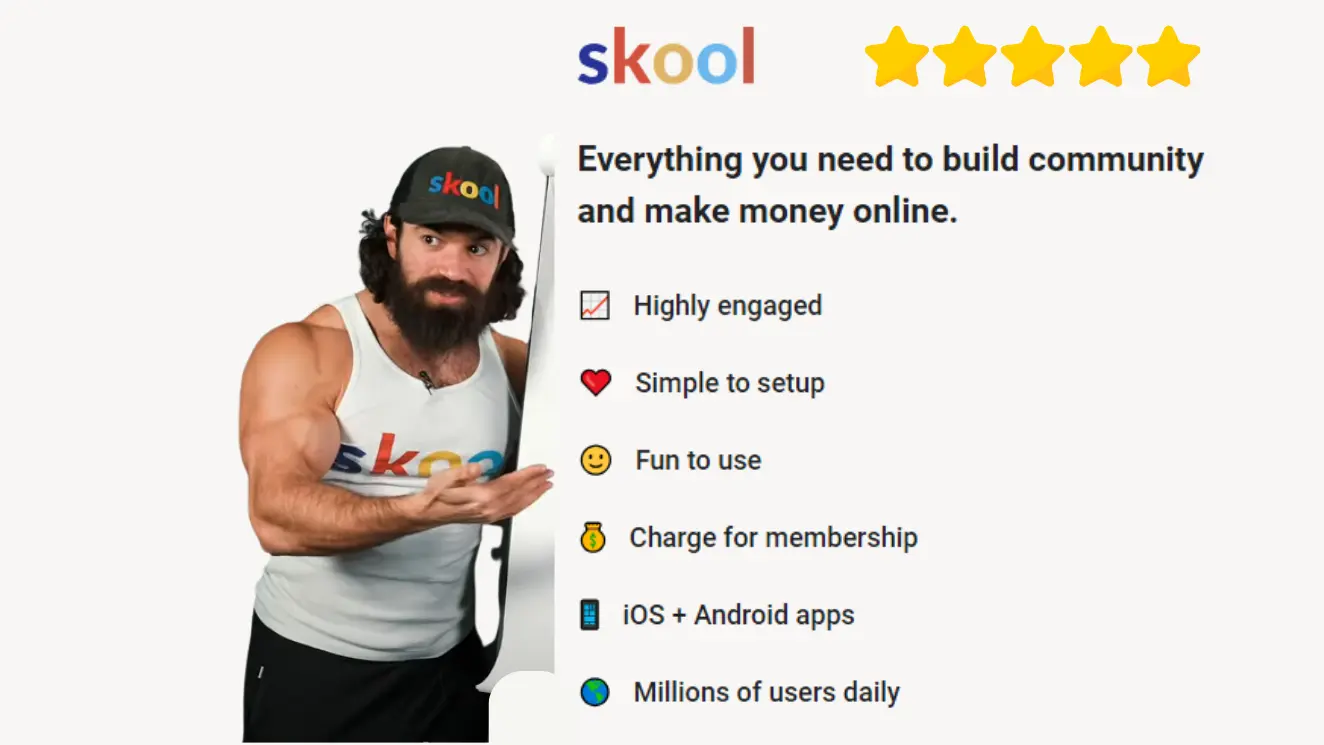
Alex Hormozi gives away his books, gives away his frameworks, and swears he’ll never sell you a course. Then he became part-owner of Skool, and the Skool Games appeared: a monthly competition where entrants build paid communities on — you guessed it — Skool, at $99 a month.
It’s the most elegant funnel in the creator economy. That doesn’t make it a bad deal. It makes it a deal worth reading the fine print on.
How the Skool Games actually work
You create a paid community on Skool, and your monthly recurring revenue puts you on a leaderboard. Top performers each month win a day at Acquisition.com HQ with Hormozi and his team. Around this competition sits a large volume of free training on offers, pricing, and community-building — much of it drawn from Hormozi’s books.
The mechanics are important: the prize rewards revenue, the platform collects $99/month from every entrant, and the training funnels everyone toward launching quickly. Every incentive in the system points the same direction, which is either brilliant alignment or a very polished casino, depending on your seat.
The education is real
Credit where due: the offer-construction and pricing material is the same thinking that made $100M Offers the most-gifted book in internet business, and it’s available without paying anyone. If you’ve never been taught how to package expertise into something sellable, this is a legitimate education.
The catch is that education about selling expertise doesn’t conjure the expertise. The Games’ biggest winners overwhelmingly arrived with an existing audience, an existing skill, or both.
The math for a median participant
At $99/month, a community with twenty members at $30/month grosses $600 and nets roughly $500 before your time. That’s a fine side project. But the leaderboard is dominated by people doing five and six figures monthly, and the content culture around the Games treats them as the norm rather than the top fraction of a percent.
Go in with the same skepticism you’d bring to any platform whose revenue is your subscription, not your success.
Who should actually enter
Enter if you have a demonstrable skill people already ask you about, or an audience of any size, and you want a forcing function to finally charge for it. The combination of free training, a decent platform, and a public deadline genuinely works for that person.
Skip it if you’re starting from zero expertise and zero audience. The Games will happily take $99 a month while you figure out what you’re selling — and that discovery is better done cheaply.
What are the pros and cons?
Pros
- The educational content around the Games is genuinely free and genuinely good
- Skool itself is a clean, well-built community platform
- Monthly winners get real access — an in-person day with Hormozi's team
- Forces a bias toward launching and charging, which most beginners need
Cons
- $99/month platform fee runs whether you earn or not
- The model quietly assumes you already have expertise someone will pay for
- Leaderboard culture pushes hype-community launches over durable businesses
- Winning is a lottery ticket; the median participant just pays rent to Skool
Frequently asked questions
- How much do the Skool Games cost?
- Entry requires a Skool community subscription at $99/month. The training content around the Games is free.
- Is the Skool Games a course?
- No. It's a monthly revenue competition on the Skool platform, surrounded by free educational content. There is no curriculum to purchase.
- What do winners actually get?
- Monthly top performers are flown to an in-person workshop day with Alex Hormozi and the Acquisition.com team.
- Can beginners win the Skool Games?
- It happens, but rarely from true zero. Most winning communities are built on pre-existing audiences or in-demand skills. Treat winner stories as outliers, not projections.
Filed under: Community Business